HOME / NASSAU COUNTY / JERICHO
Service Area · Fast response, 24/7
Jericho's mix of mid-century colonials and split-levels means aging pipes, finished basements, and crawl spaces that can turn a small leak into a serious problem fast. ATC Restoration is based right here on Long Island and responds 24/7, so you get a local crew that knows Nassau County homes — not a franchise dispatched from hours away.
(516) 717-9616Tap to call · Answered around the clock
Water damage in Jericho
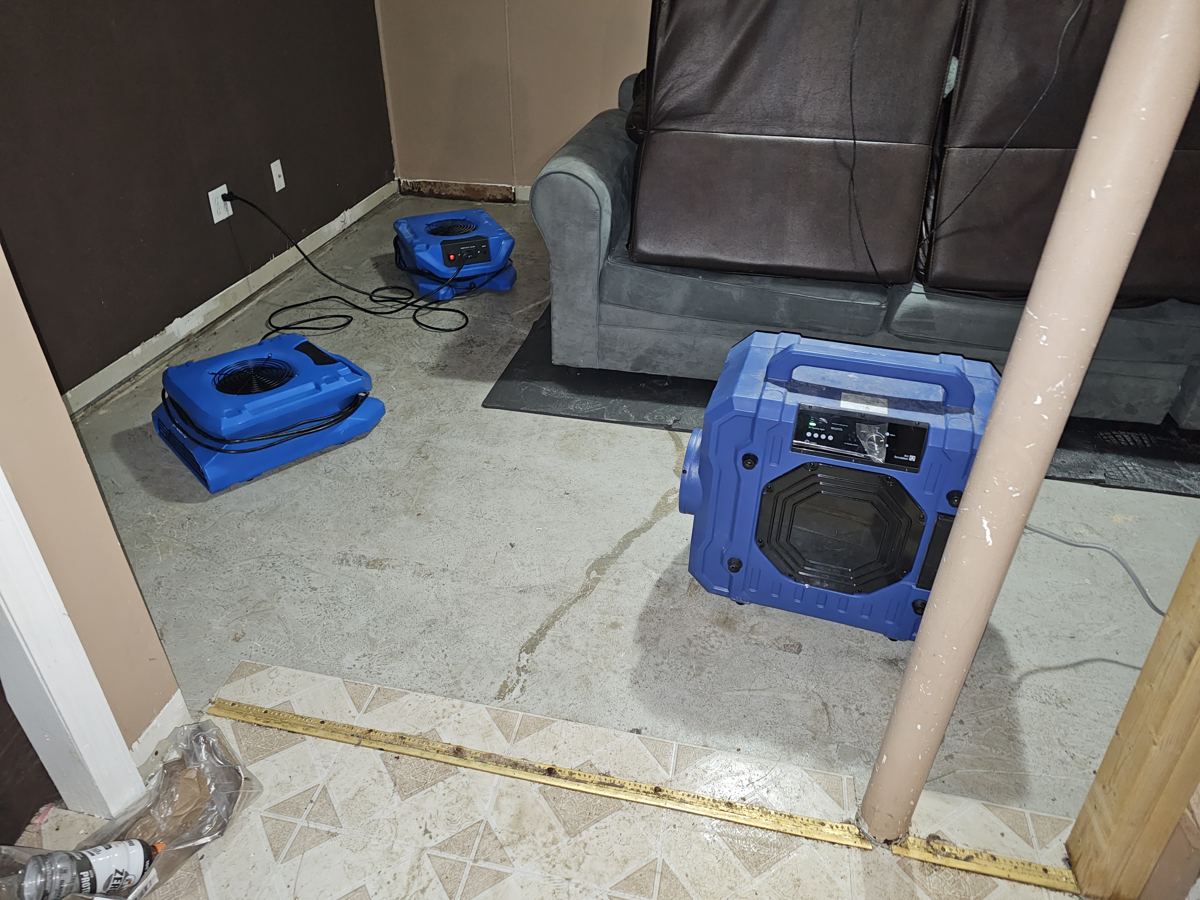
Many Jericho homes were built with fully finished lower levels that absorb water into drywall, insulation, and flooring before the damage is even visible. Getting water extracted and drying equipment in place quickly is the only way to limit how much of that finished space has to be torn out.
Homes built in the 1950s through 1970s — common throughout Jericho — often have supply lines and drain connections that are well past their expected lifespan. A slow leak inside a wall can saturate framing and insulation for weeks before a homeowner notices any sign of it.
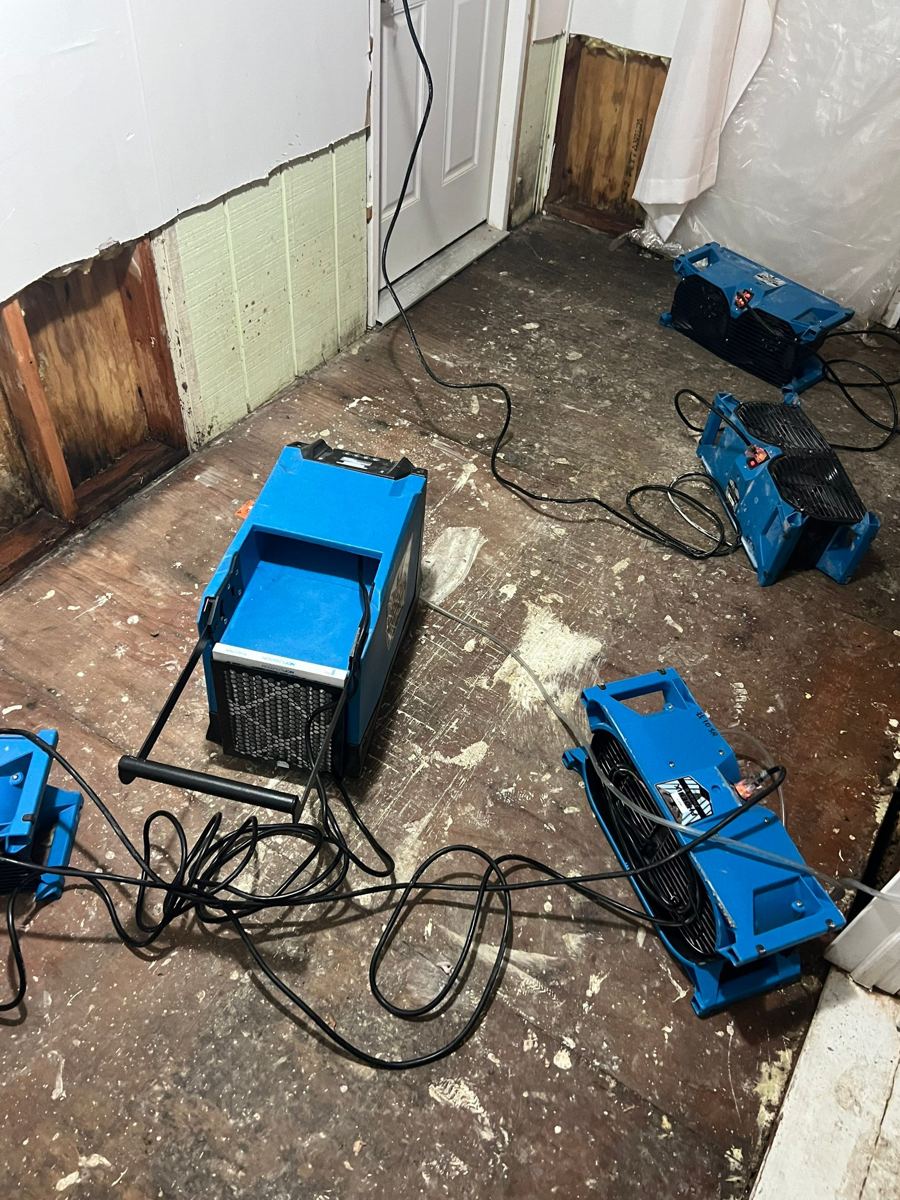
Nassau County's humid summers mean that wet building materials in a Jericho home can begin supporting mold growth within a day or two if drying is delayed. Thorough structural drying — not just surface cleanup — is what prevents a water damage call from becoming a mold remediation job.
Every service, every day
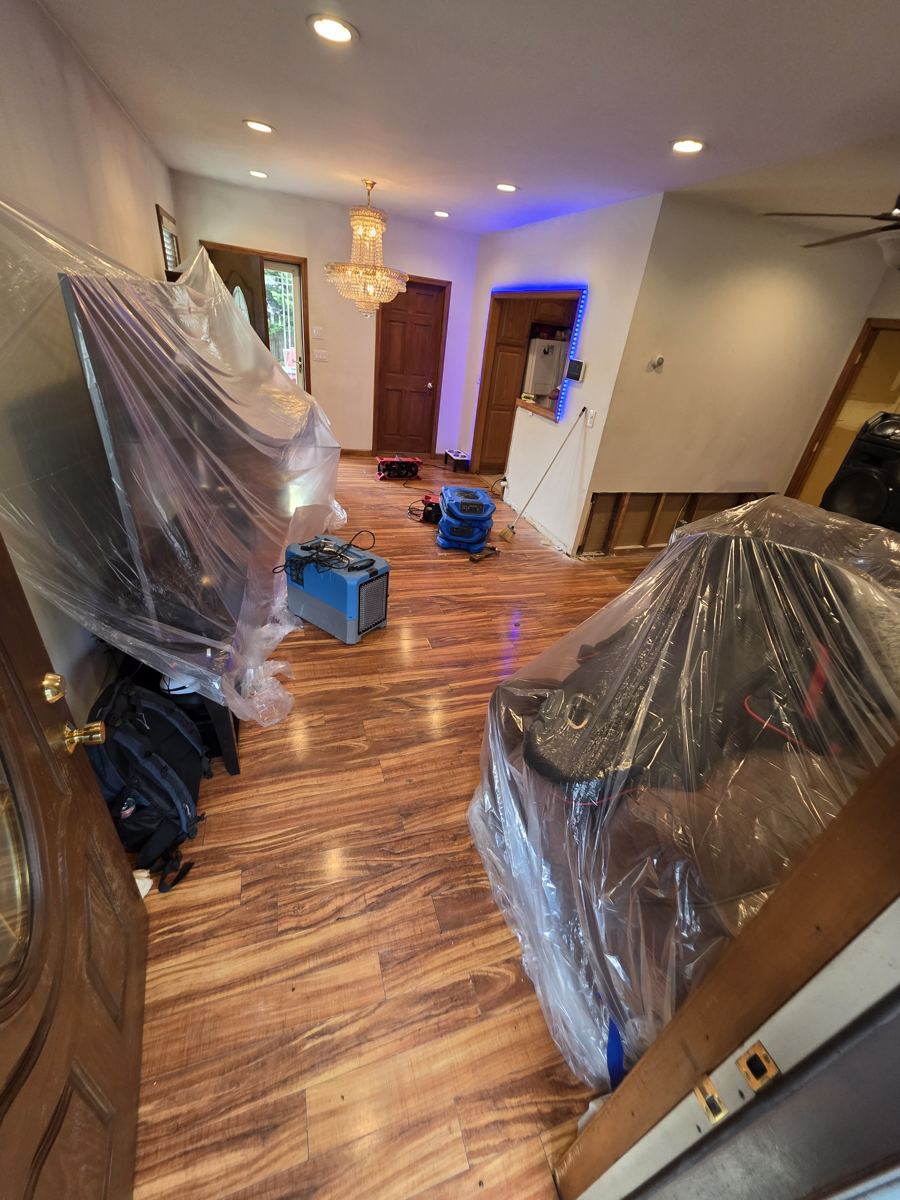
Burst pipes, appliance failures, flooded basements — extraction, structural drying, and documented moisture verification.
Learn more →SVC-02Same-night board-up, soot and odor removal, structural cleaning, and full rebuild — one company, start to finish.
Learn more →SVC-03Containment, removal, and independent clearance verification — done to standard, not sprayed and prayed.
Learn more →SVC-04Nor'easters, hurricanes, wind and flood — tarping, board-up, water mitigation, and rebuild, coordinated with your carrier.
Learn more →SVC-05Category 3 extraction, disinfection, and safe disposal with full PPE protocols — protecting your family from contamination.
Learn more →SVC-06Oil burner misfire coating your home in soot? Specialized cleaning for the messiest loss Long Island winters produce.
Learn more →SVC-07From flood cuts to finished rooms — the same company that dried your home rebuilds it under the same claim.
Learn more →SVC-08Fire, break-in, or storm-exposed structure secured the same night — required by most policies to prevent secondary damage.
Learn more →SVC-09Inventoried, photographed, cleaned, and stored in our climate-controlled facility — every item documented for your claim.
Learn more →SVC-10Offices, retail, restaurants, multi-family — after-hours work and priority response agreements that minimize interruption.
Learn more →Coverage
Syosset · Woodbury · Hicksville · Plainview · Old Bethpage · Muttontown · East Norwich · Brookville · Cold Spring Hills · Westbury · Bethpage
// Near Jericho but not listed? Call — we cover all of Nassau County.
What homeowners say
Local questions
First, shut off the water at the nearest valve or at the main if you are not sure of the source, and turn off electricity to any affected area at the breaker panel before stepping into standing water. Once it is safe, take photos and short videos of everything — the source, the standing water, and any damaged belongings — because that documentation is important for your insurance claim. Then call a restoration company so drying equipment can be placed as soon as possible; every hour of delay allows water to travel further into walls, floors, and framing.
Homes built several decades ago often contain materials like older drywall, wood lath, and cellulose-based insulation that absorb moisture readily and provide an ideal surface for mold to take hold. In Nassau County's warm, humid months, conditions inside a wet wall cavity can allow mold to begin developing within 24 to 48 hours of a water event. Fast, thorough structural drying — not just removing visible water — is the critical step that keeps a manageable water damage job from turning into a much larger mold remediation project.
Yes. We document the damage thoroughly — moisture readings, photos, and a detailed scope of work — so your adjuster has everything needed to process the claim. We bill your insurance company directly, which removes a significant administrative burden from you during an already stressful situation.
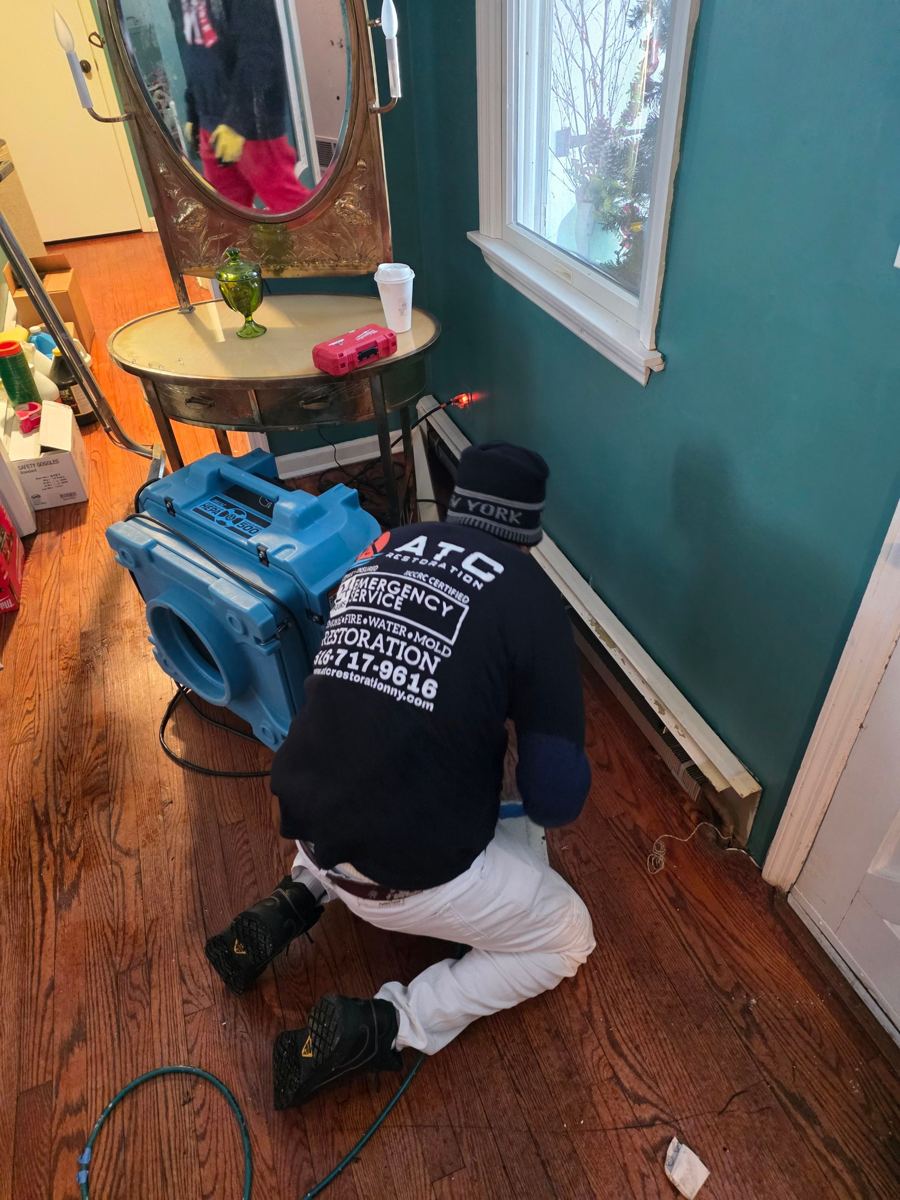
Surface water that has been mopped up does not mean the structure beneath is dry — water migrates quickly into subfloor material, wall cavities, and insulation where it is not visible. Our technicians use moisture meters and thermal imaging to map exactly how far water has traveled beyond what you can see. That assessment tells us where drying equipment needs to be placed and confirms when the structure has actually reached a safe moisture level.
Real ATC jobs


Every hour of waiting costs you more
Answered 24/7. Tell us your town — we will tell you exactly when we can be there.