HOME / SUFFOLK COUNTY / DEER PARK
Service Area · Fast response, 24/7
Water damage moves fast in Deer Park homes, and the longer it sits the deeper it goes into subfloors, drywall, and framing. A local Long Island crew that knows the area can get to you quickly and start drying before the damage spreads.
(516) 717-9616Tap to call · Answered around the clock
Water damage in Deer Park
Many Deer Park homes were built in the mid-twentieth century and still have older supply and drain lines that are more prone to sudden bursts or slow leaks behind walls. Catching a plumbing failure early limits how far water travels through your home's structure.
Heavy rain on Long Island can overwhelm storm drains and push water into basements, especially in lower-lying areas of Deer Park where the ground saturates quickly. A flooded basement needs prompt extraction and drying to prevent mold from taking hold within days.
Water heaters, washing machines, and HVAC condensate lines are common sources of hidden water damage in suburban homes like those throughout Deer Park. Even a slow drip over weeks can saturate insulation and rot out a subfloor before a homeowner notices.
Every service, every day
Burst pipes, appliance failures, flooded basements — extraction, structural drying, and documented moisture verification.
Learn more →SVC-02Same-night board-up, soot and odor removal, structural cleaning, and full rebuild — one company, start to finish.
Learn more →SVC-03Containment, removal, and independent clearance verification — done to standard, not sprayed and prayed.
Learn more →SVC-04Nor'easters, hurricanes, wind and flood — tarping, board-up, water mitigation, and rebuild, coordinated with your carrier.
Learn more →SVC-05Category 3 extraction, disinfection, and safe disposal with full PPE protocols — protecting your family from contamination.
Learn more →SVC-06Oil burner misfire coating your home in soot? Specialized cleaning for the messiest loss Long Island winters produce.
Learn more →SVC-07From flood cuts to finished rooms — the same company that dried your home rebuilds it under the same claim.
Learn more →SVC-08Fire, break-in, or storm-exposed structure secured the same night — required by most policies to prevent secondary damage.
Learn more →SVC-09Inventoried, photographed, cleaned, and stored in our climate-controlled facility — every item documented for your claim.
Learn more →SVC-10Offices, retail, restaurants, multi-family — after-hours work and priority response agreements that minimize interruption.
Learn more →Coverage
North Babylon · Wyandanch · Wheatley Heights · Dix Hills · Melville · Bethpage · Farmingdale · Pinelawn · Amityville · Copiague · West Babylon
// Near Deer Park but not listed? Call — we cover all of Suffolk County.
What homeowners say
Local questions
First, shut off the water at the source or at your main shutoff valve to stop the flow, then turn off electricity to any affected rooms at the breaker panel if you can do so safely without stepping through standing water. Take photos and short videos of everything before moving anything — that documentation matters for your insurance claim. Then call a restoration company so extraction and drying equipment can be on the way while the damage is still contained.
Mold can begin to grow within 24 to 48 hours in warm, damp conditions, which is why fast drying is so important after any water event. Long Island's humid summers make conditions especially favorable for mold once moisture gets into walls or under flooring. The goal of professional drying is to bring moisture levels down before that window closes.
Coverage depends on the cause — sudden and accidental events like a burst pipe are typically covered, while gradual leaks or flooding from outside may be treated differently under your policy. We document everything your adjuster needs and bill your insurance company directly, so you are not left managing paperwork in the middle of a stressful situation. It is always worth calling your insurer promptly to report the loss and ask about your specific coverage.
Consumer fans move surface air but do not pull moisture out of wall cavities, subfloors, or insulation the way commercial drying equipment does. Without measuring moisture levels inside building materials, it is easy to think something is dry when it is still wet enough to support mold growth. Professional equipment, combined with moisture readings taken over several days, is the reliable way to confirm a structure is truly dry.
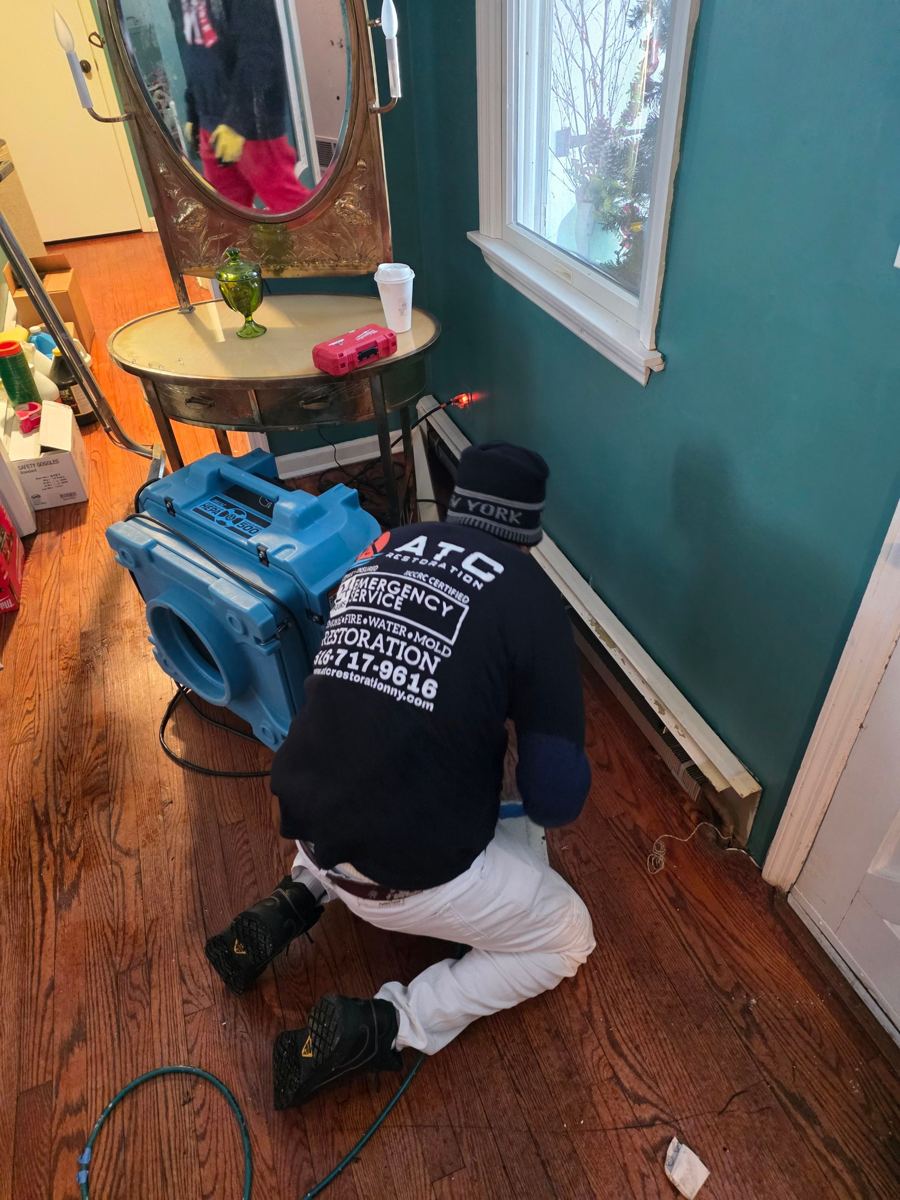
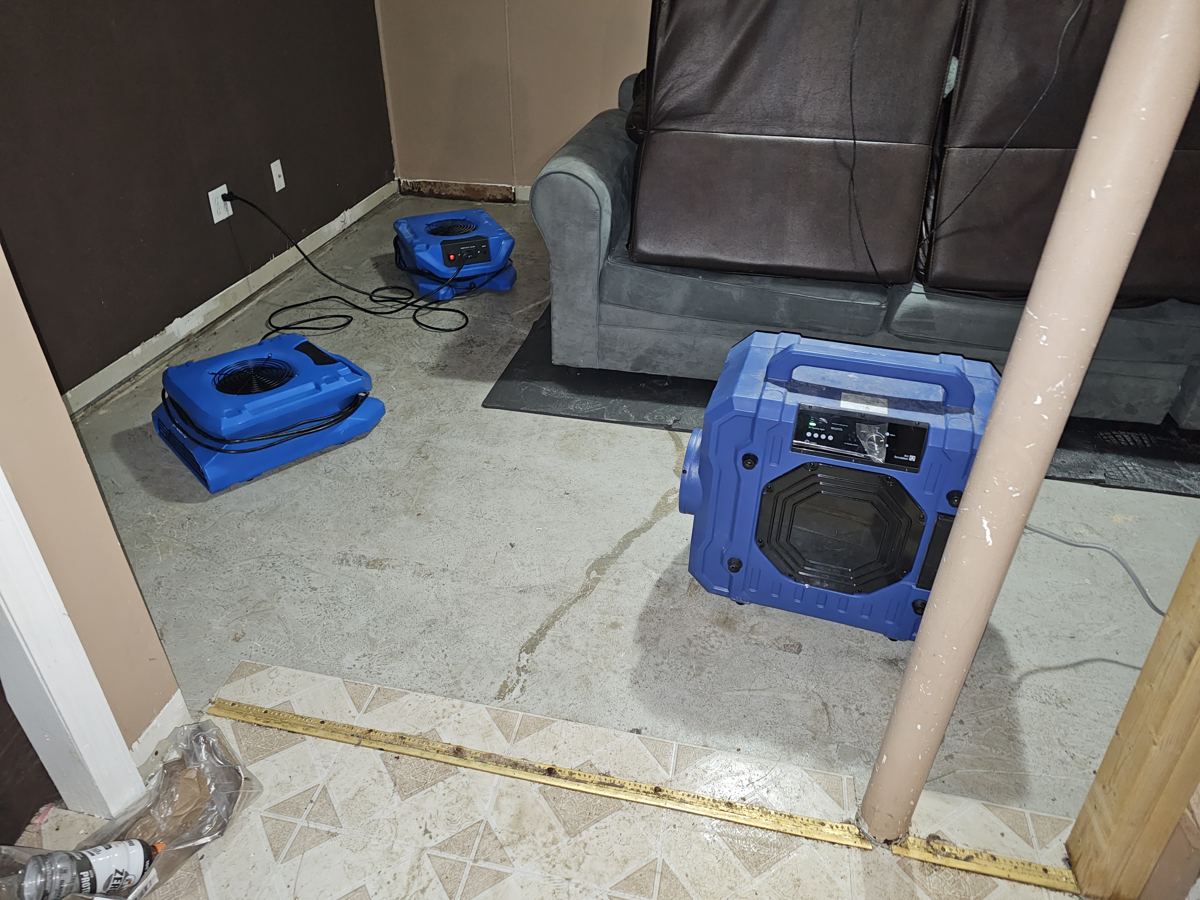
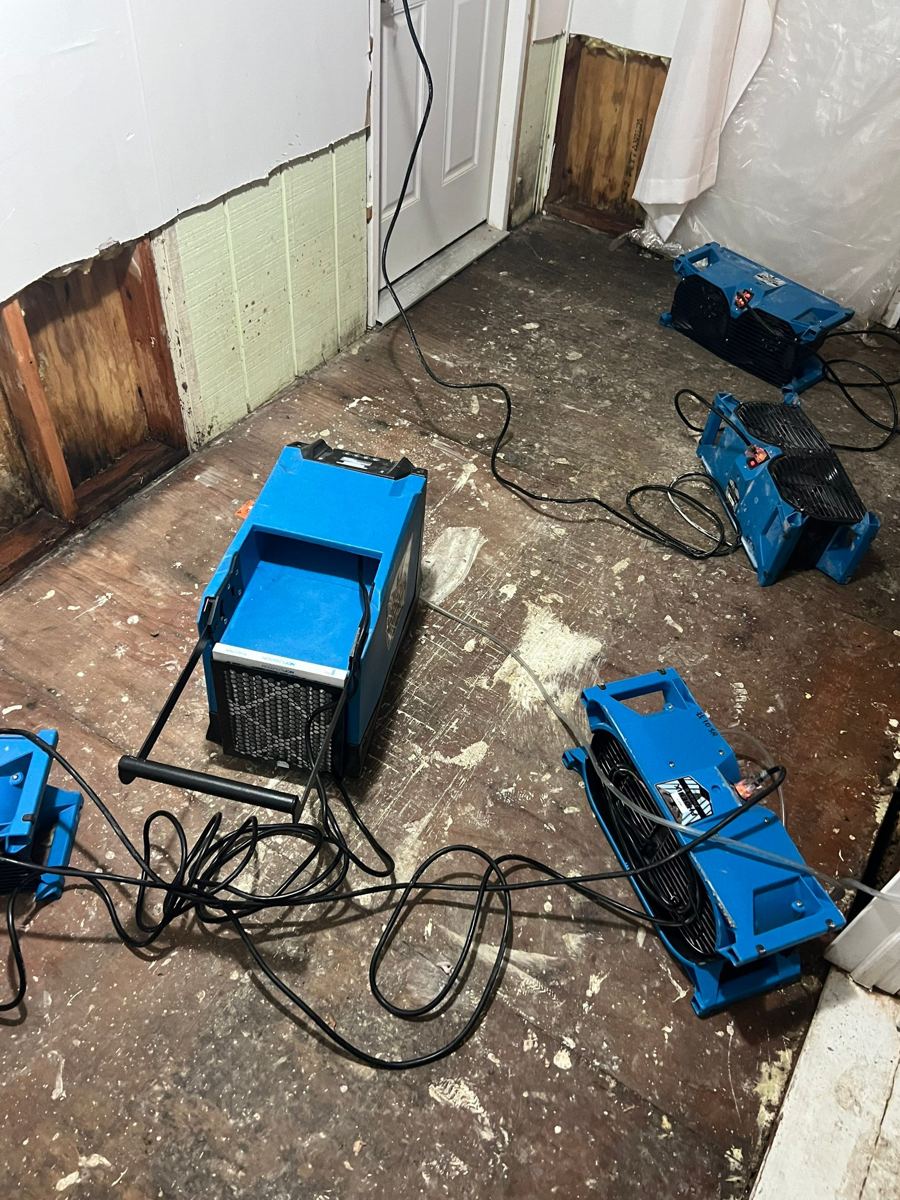
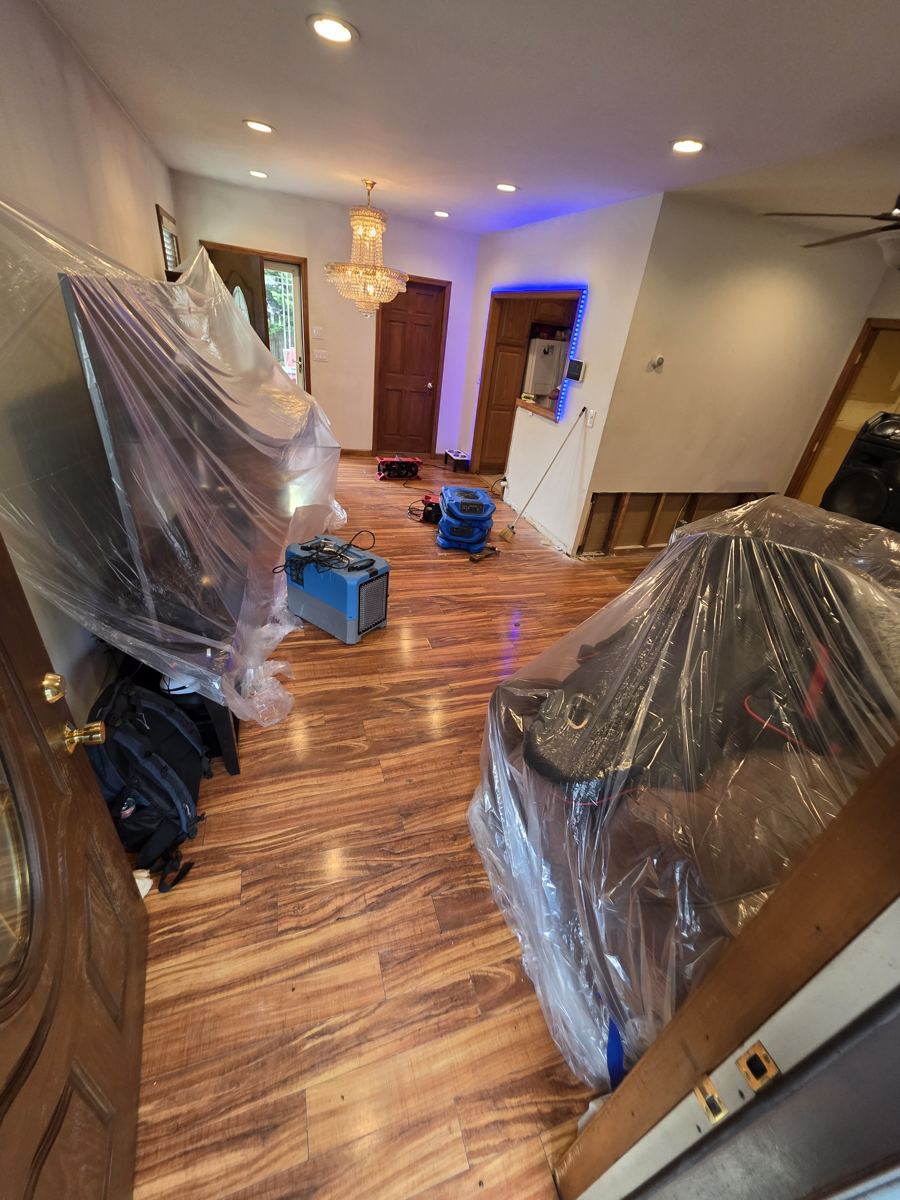
Real ATC jobs


Every hour of waiting costs you more
Answered 24/7. Tell us your town — we will tell you exactly when we can be there.